
4 min. read
Every parent seeks to reassure their children. We want children to feel safe, cared for, like we’ve got them. We want desperately to use our greater experience with and knowledge of the world to let them know what they should and shouldn’t worry about. We chant, “You’re okay!” “You’re fine!!” “It’s okay!” “It’s just a….” in an attempt to share this knowledge and experience with them. We may be lighthearted and singsongy or we might be a little more gruff and irritated. As Dr. Aletha Solter says, “We so desperately want our children to be happy, that we forget the importance of letting them experience the entire range of emotions.”
Our child’s concern may come about:
in a social situation (another child approaching at an alarming rate, a child entering their personal space, spending time with unfamiliar–or even familiar–adults)
in a moment of separation (your infant/toddler protesting when you go to the bathroom, fix yourself a snack or a cup of coffee, hand them to another caring adult)
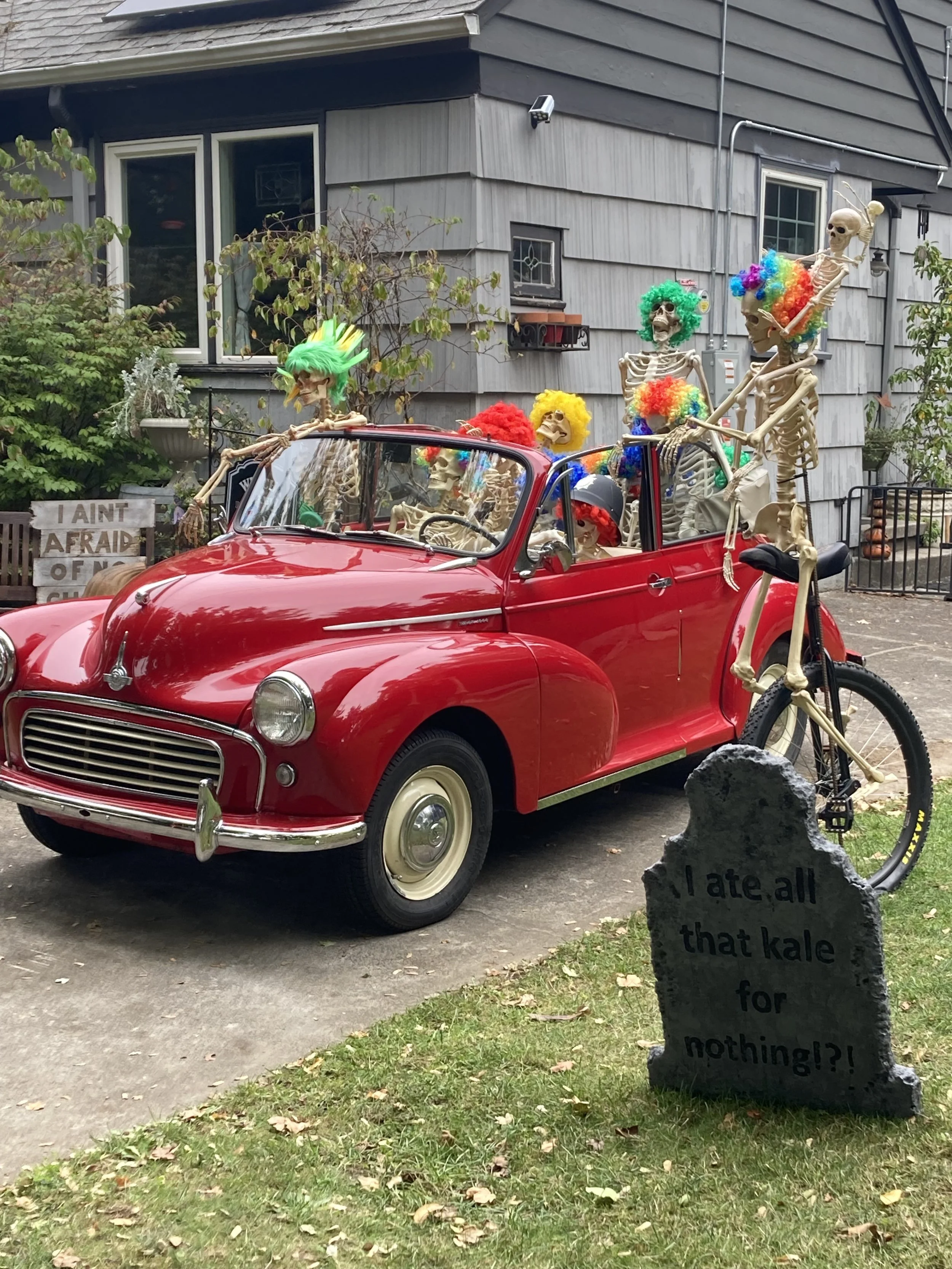
out and about in the community (a barking dog, a siren, loud brakes on a city bus, the flush of a public toilet, spooky Halloween decorations)
in a new environment (joining a parent-child class, attending storytime, at a grandparent’s home who they don't see often)
after a tumble (my preferred word for fall) or injury
[Sidenote: Highly sensitive and neurodivergent children often have more sensitively tuned nervous systems and might register sounds/sensations more intensely than other children.]
Infants and young children are perceptive. They’re learning about the world all day, every day. And while our intentions are impeccable, I think a lot about what the experience might be for a young child who was surprised and, in an attempt to co-regulate with their grownup, communicated concern through their words, facial expressions, or body language, only to be met with dismissal. To be met with a statement of fact (lacking nuance) rather than curiosity. Does this impact their willingness to reach back out to us, their ability to trust their instincts and emotional experiences, their ability to access resilience and feel more confident in the future? We want them to know that we truly value their experience.
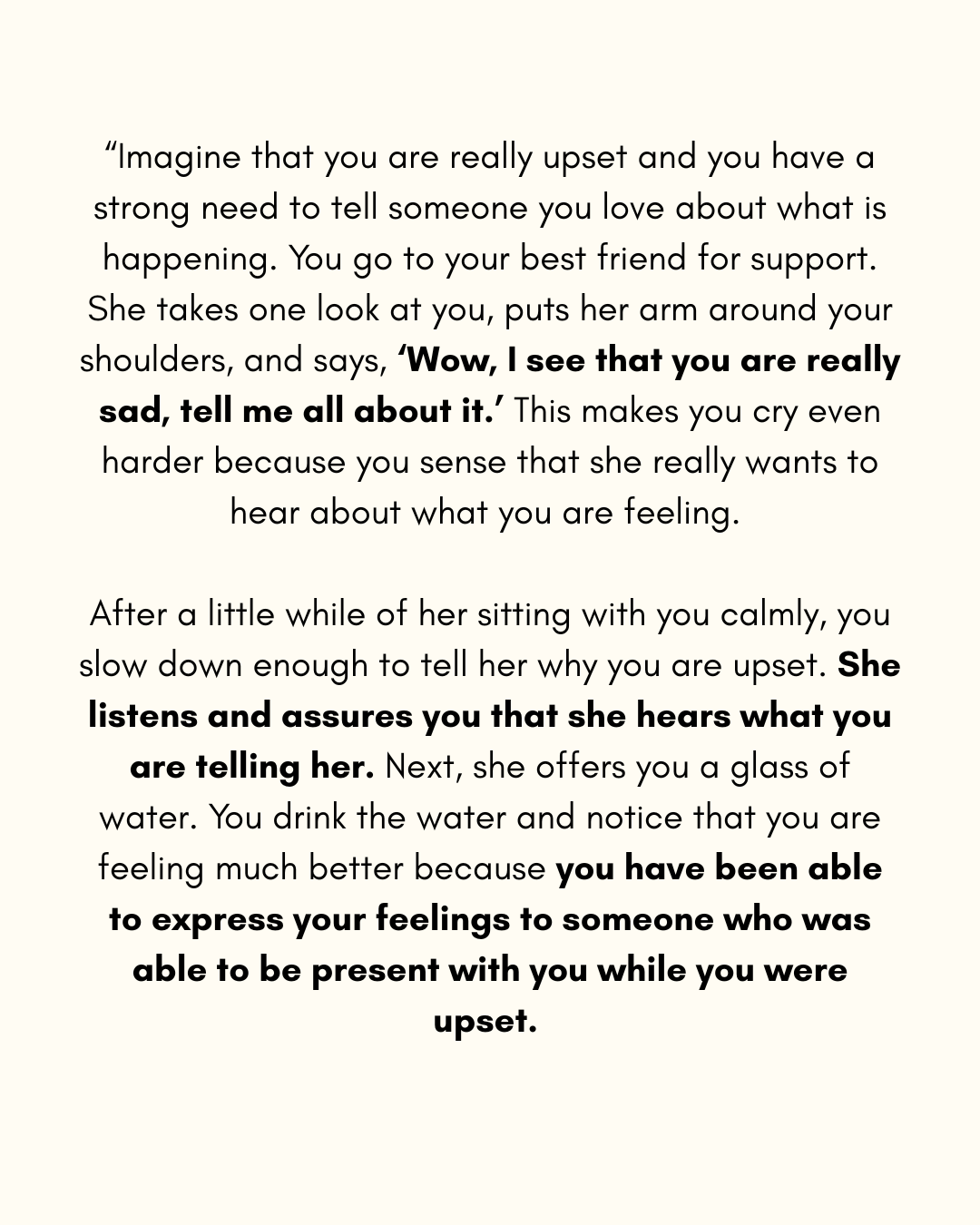
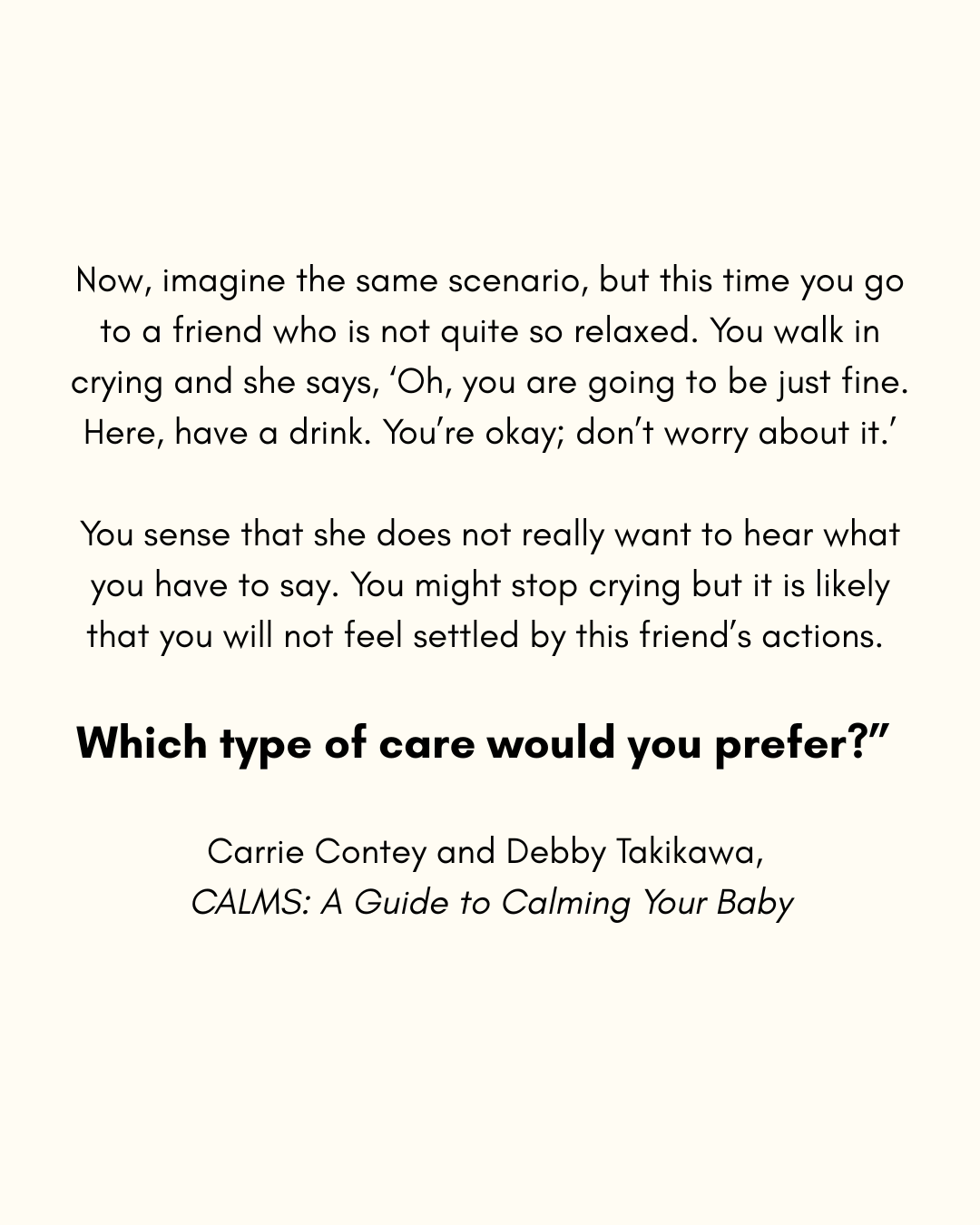
I think there are a few super simple ways to reassure children without having to default to, “You’re okay!”
Sportscasting and validating. This term was coined by Magda Gerber as an empathic, non-judgemental verbal strategy for narrating children’s struggles. She explains, “This helps calm… children by letting them know that they are being understood and empathized with.”
This doesn’t have to be elaborate, we’re just affirming children’s experiences here by using our facial expressions and body language to communicate concern. Our goal isn’t to fully join children if they seem scared but we want them to know we’re resonating with their experience. We want to convey, I’m paying attention and I saw that you didn’t like that. As Dr. Larry Cohen says, “The opposite of dismissal is acknowledgement.”
Examples:
That doggy really surprised* you, huh?
You had a tumble, I saw that.
You didn’t want me to go to the bathroom, I hear you!
You want to be close to me right now, huh?
You’re not ready for auntie to hold you yet?
I hear it! We don’t hear thunder here very often, do we?
You don’t like the looks of those decorations, do you? or
It has those big teeth! And an orange face! What do you notice?
That was a little spooky, huh? A dramatic shiver, wide eyes, a drawn out “spoooooooky” and a smile can add a little lightness.
[not saying anything but allowing child to sit on your lap until they’re ready to venture out]
*I prefer using words like surprised and startled instead of scared.
2. Modeling calmness and curiosity
We can ask ourselves, How can I communicate safety and care through my body and words (considering tone, body language and facial expressions), keeping in mind that logic and explanations are often fruitless.
That noise startled you. I heard it! I wonder what it was?
Oh my goodness, that surprised me too!
That was loud, huh?!
She came close to you. I wonder what her plan is? Are you wanting some space?

3. Accessing playfulness
One of my all time favorite strategies for “joining with” a child in their experience comes from Adele Faber and Elaine Mazlish’s incredible book, How to Talk so Kids Will Listen and Listen so Kids Will Talk: grant their wish in fantasy. By attuning to the core of what a child is wanting or worried about we can offer a response that shows just how much we understand.
Should we dig an enormous hole and toss those decorations in? We could scoop SO much dirt on top so we wouldn’t have to see them ever again!
You wish that thunder would just stop already! Go away thunder! We just want to hear the gentle pat pat of rain!
Do you wish I could hold you FOREVER? I would never have to go potty or eat or go to work! We could just cuddle and snuggle all day and all night… that would be SO special.
[Barking dog] What if that dog meowed instead? Chirped like a little baby bird (“cheep cheep”)?
We can also simply ask, Are you okay? Sometimes our fear of “negative” emotions like sadness can prevent us from using these three little words. We think that by skipping ahead and telling our child they’re fine we just might be able to bypass those trickier emotions. Unfortunately (or fortunately, depending on your perspective), the only way to become familiar and comfortable with these emotions is by experiencing them, fully and all the way through.
Dr. Larry Cohen’s book The Opposite of Worry provides a wonderful approach for working with kiddos’ worries. If your kiddo is sensitive or cautious or you’re just not 100% sure how to support them, I encourage you to check it out.
Happy Halloweening!
Resources:
Cohen, Lawrence. (2013). The Opposite of Worry: The Playful Parenting Approach to Childhood Fears and Anxieties.
Contey, Carrie & Takikaway, Debby. (2007). Calms: A Guide to Soothing Your Baby.
Solter, Aletha. (1998). Tears and Tantrums: What to Do When Babies and Children Cry.