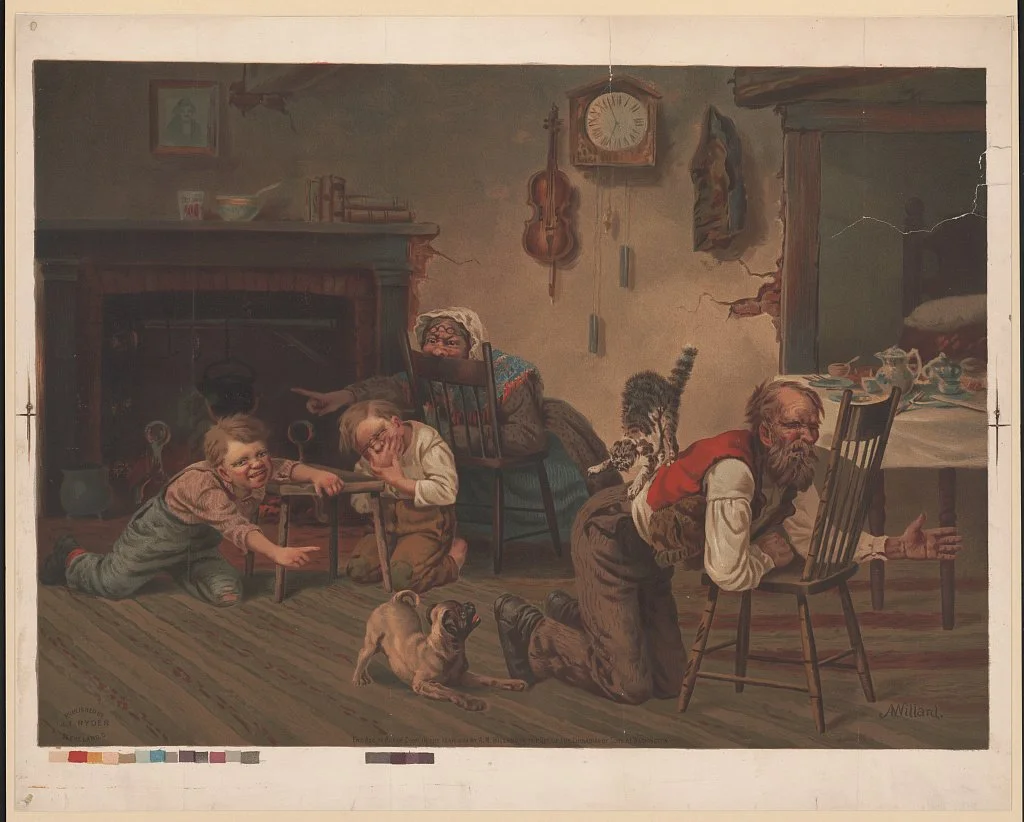
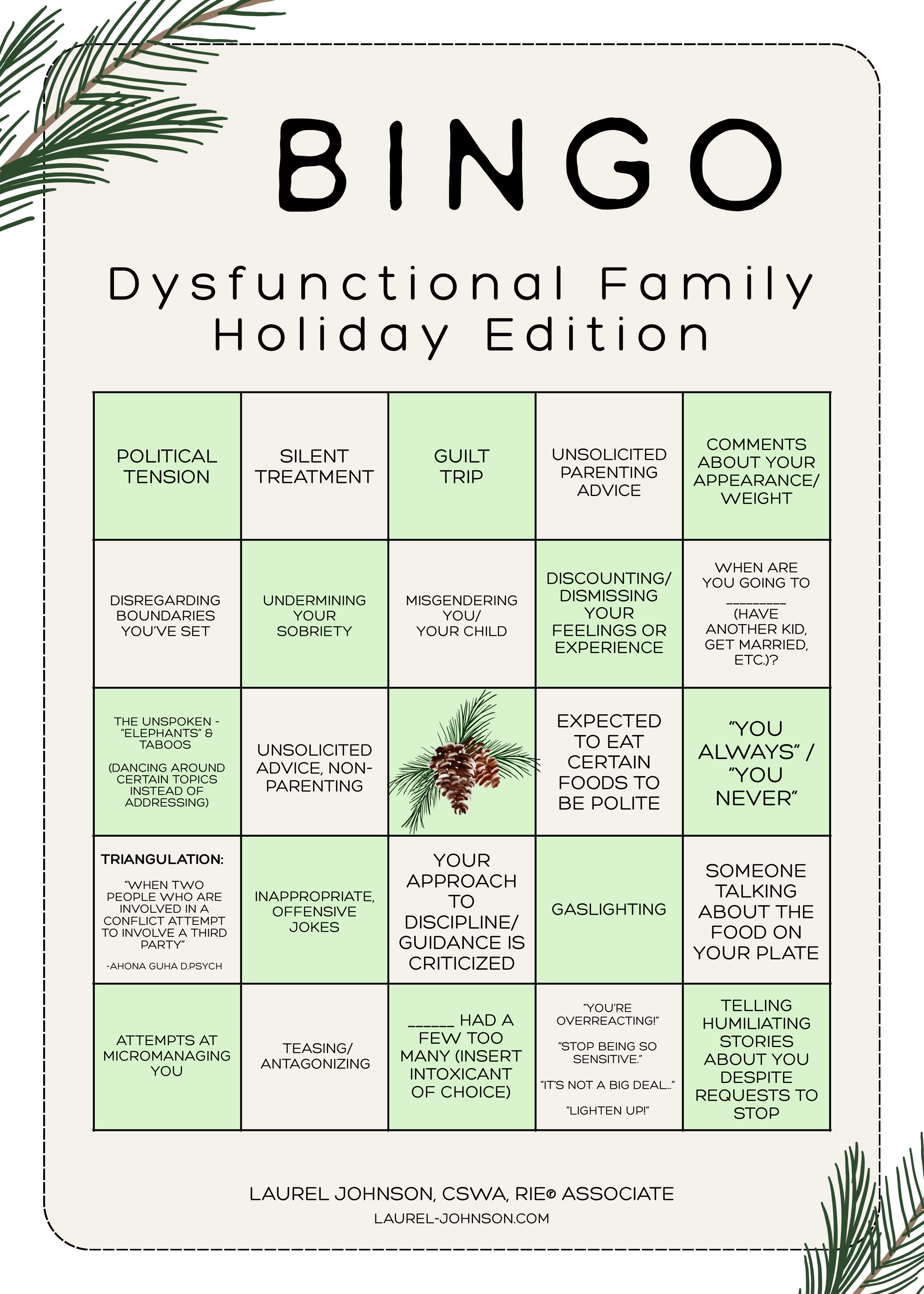
(2 min. read) Last week I heard a fantastic idea from one of my mentors, Dr. Larry Cohen… dysfunctional family bingo. Whether or not you identify your family as dysfunctional, this is a way to add a bit of lightness to gatherings that may be stressful, uncomfortable, and triggering otherwise; because, let’s be honest, all of us get triggered by our families of origin sometimes. Of course, you “play” this game with yourself (no one needs to know that you’re tallying slights) and you get to decide what your “prize” is.
While it might seem like fortune telling (a common cognitive distortion) to catalog triggers in advance, it can actually be quite helpful to consider and prepare for challenging possibilities ahead of time. In his book Triggers: How We Can Stop Reacting and Start Healing, Dr. David Richo reminds us,
Naming is a primary way of dealing with any trigger. Making a list of our familiar, often-repeated triggers leads us to be on the lookout for them, to have a plan to deal with them… We can make a conscious response rather than act on reflex. This escape from compulsion is our gateway to freedom (53-54).
You get to decide how you want to respond, instead of being caught off guard.
Dr. Ramani Durvasula, clinical psychologist who specializes in supporting folks who are experiencing narcissistic relationships, has created her own version called “narcissist bingo.” She suggests picking a number of triggering behaviors or comments ahead of time that we’ll tolerate and using this “quota” as a cue to disengage or even leave an event. She encourages us, "If you can’t get out of it, go do something else ... go to the restroom and splash water on your face, go get something from your car, make up an excuse and do whatever it is to help you regulate.”
This is just one way you can bolster yourself through the holiday season (and throughout the whole year). I’ll be thinking of you and sending those sweet solid boundary vibes your way!
Resources:
The Best Tactic to Use When Talking to a Narcissist, According to a Therapist
Gibson, Lindsay. Adult Children of Emotionally Immature Parents: How to Heal from Distant, Rejecting, or Self-Involved Parents.
Harper, Faith. Unf*ck Your Boundaries: Build Better Relationships through Consent, Communication, and Expressing Your Needs
Richo, David. Triggers: How We Can Stop Reacting and Start Healing.